
News · October 21, 2026
Southwest Florida's Housing Crunch: Where We Stand and How AHF Can Help
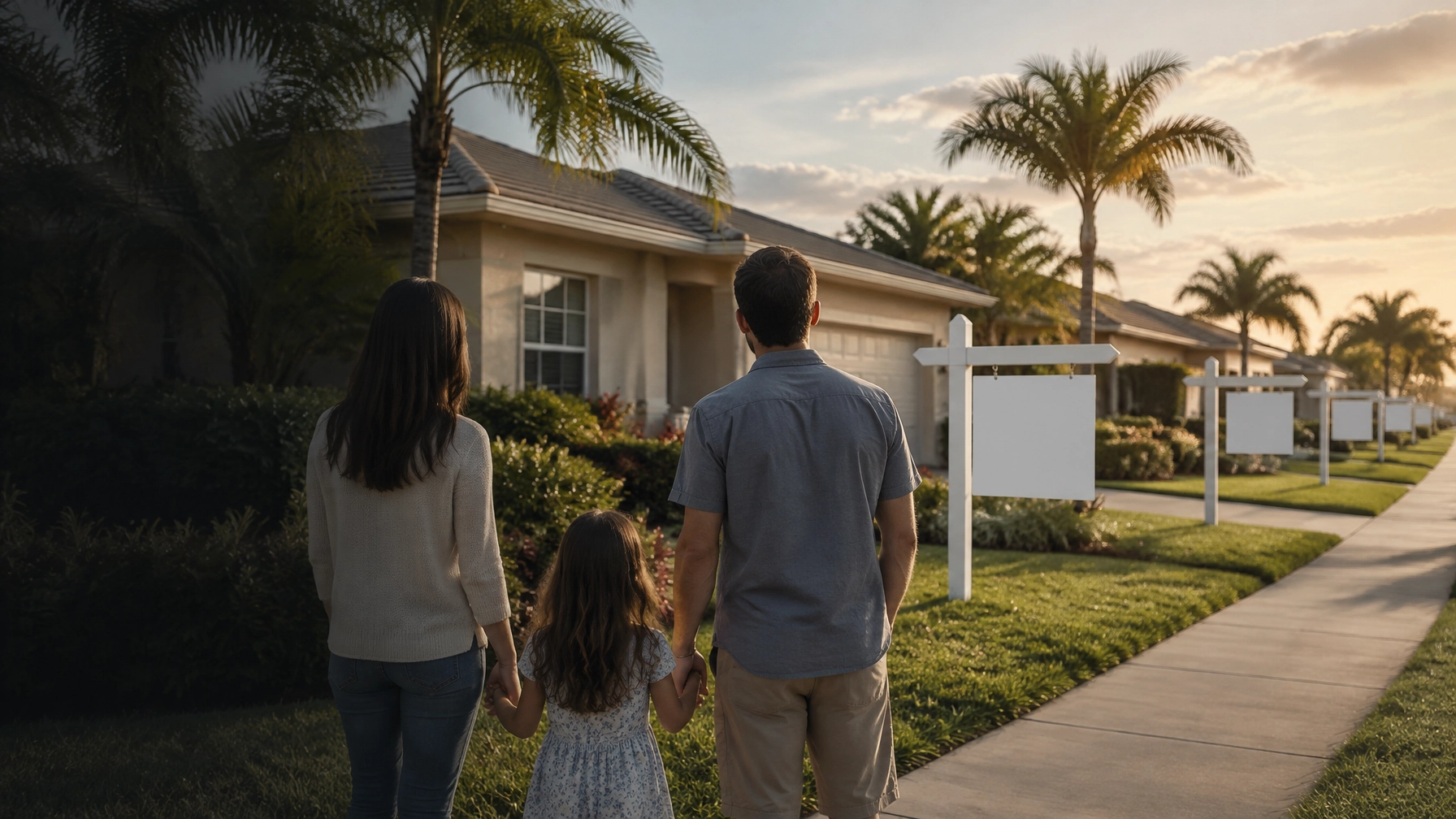
Prices are falling. So why can't families find a home they can afford?
If you've been following the headlines, you might think Southwest Florida's housing problem is fixing itself. Home prices in Lee County are down, rents have dipped, and "For Sale" and "For Rent" signs are everywhere.
But at Affordable Homeownership Foundation, we sit across the table from local families every week, and the picture looks very different from there. The teachers, nurses, first responders, restaurant workers, and retirees who keep Lee, Collier, Charlotte, and Hendry counties running are still struggling to find a safe, stable place to live that fits their budget.
Here's what's really happening in our local housing market, who it's hurting most, and what you can do about it.
The numbers behind the headlines
Yes, prices have come down. The median home sale price in Lee County was about $365,000 in the first quarter of 2026, down slightly from a year earlier (PropertyShark). Realtor.com has projected Lee as the only metro in the nation where typical home prices will fall by double digits this year, while Naples still hovers around a $720,000 median (News-Press / Naples Daily News).
Rents have softened too. The typical Fort Myers apartment listed for about $1,980 a month at the start of the year, roughly 9% less than a year before. In Naples, it was about $3,200.
The problem is that these prices are coming down from record highs, and local paychecks never caught up. In Lee County, a family of four earning less than $82,100 is considered lower-income. For that family, even a "cheaper" home or apartment can eat up far more than the recommended 30% of their income.
The result: tens of thousands of local households are cost burdened, according to the University of Florida's Shimberg Center for Housing Studies.
|
County |
Households paying more than 30% of income for housing |
Households paying more than 50% |
|---|---|---|
|
Lee |
106,468 |
50,965 |
|
Collier |
54,275 |
26,756 |
That means roughly half of all cost-burdened households in each county are spending more than half of everything they earn just to keep a roof overhead.
Why a lower price tag doesn't mean an affordable home
The sticker price is only part of what a family pays each month. In Southwest Florida, several other costs are doing the real damage.
Insurance. Homeowners and flood premiums climbed sharply after recent storms, adding a significant monthly cost on top of the mortgage. Rising insurance and high interest rates have kept homeownership out of reach for many would-be buyers, even as prices ease (Gulfshore Business).
Condo and HOA fees. Florida's post-Surfside safety and reserve laws, combined with soaring building insurance, have pushed association dues and special assessments up fast. Some condo owners, many of them seniors on fixed incomes, are being forced to sell. Naples-area condo values have fallen nearly 17% from their 2022 peak.
Storm recovery. Hurricane Ian destroyed more than 9,900 homes in Lee County and caused major damage to at least 13,173 more, leaving over 130,000 people in need of housing help. Rents spiked as displaced families competed for fewer units, and local homeless counts rose with them.
The wrong kind of supply. New construction is everywhere, but most of it is market-rate or luxury. High land prices, construction costs, and multi-year permitting make low-cost housing hard to build. And many affordable units only stay affordable for about 30 years before they can convert to market rate.
Who is feeling it most
The people most affected are not who you might expect. Statewide, 79% of renter households include at least one working adult, according to the Shimberg Center's 2025 Rental Market Study (Florida Housing Coalition). Many of the families we counsel work full time and still fall behind.
- Working families. Nearly half of Florida renters earning 60% to 80% of area median income are now cost burdened, up from 29% just three years earlier. This is the region's workforce: health-care aides, teachers, hospitality staff, and tradespeople.
- Seniors. About 39% of low-income, cost-burdened renters in Florida are 55 or older. Many are on fixed incomes while rents, insurance, and association fees keep rising.
- Veterans and people with disabilities. Those on fixed benefits have little room to absorb a rent increase or a surprise assessment, and accessible, affordable units are scarce.
- Families on the edge of homelessness. The study estimates nearly 30,000 individuals and more than 44,000 families with children in Florida lack stable housing, with both numbers rising since 2022. Hurricane displacement is part of the reason.
And the safety net is thinning. By 2034, affordability restrictions are set to expire on more than 33,000 assisted rental units statewide unless new funding steps in.
The opportunity hiding in a cooler market
There is real good news here for prepared buyers. With more homes on the market and sellers more willing to negotiate, buyers have more choices and more leverage than they've had in years.
Help with the upfront cost is also available. Florida's Hometown Heroes program reopened in July 2026 with $50 million for first-time buyers in eligible jobs, including teachers, health-care workers, first responders, and veterans. It offers up to $35,000 toward down payment and closing costs as a 0% deferred second mortgage (Florida Housing via EIN Presswire). Funding tends to run out quickly, so buyers who are already pre-approved and educated are the ones who benefit. Other state and local programs, such as county SHIP assistance, may also help.
The key is preparation. A lower price only helps if you understand the full monthly cost, including insurance, taxes, and any association fees, before you sign.
How Affordable Homeownership Foundation can help
No family should have to navigate this market alone. As a HUD-approved housing counseling agency serving Lee, Collier, Charlotte, and Hendry counties, AHF works one-on-one with residents at every stage of the housing journey.
- Homebuyer counseling and education. HUD-certified counselors help you understand your budget, credit, true monthly costs, and the assistance programs you may qualify for, so you're ready when the right home appears.
- Renter support. Our Responsible Renter Course gives tenants the knowledge and confidence to find, secure, and keep a stable rental home.
- Pathways out of homelessness. We help clients move from crisis to stable housing and build the skills to stay there.
- Affordable rental housing. As a Community Housing Development Organization (CHDO), AHF helps provide affordable rental units for local families.
Here's how you can take the next step:
- Looking for housing help? Visit AHF.today to schedule an appointment with a housing counselor.
- Want to make a difference? Your donation helps a local family move from cost burdened to stably housed.
- Represent a business, bank, or faith community? Partner with us to bring housing education to your employees or members.
Southwest Florida's housing challenges are real, but so are the solutions. Together, we can make sure the people who make this region special can afford to call it home.
Sources
- Priced out of Paradise: Affordable housing lags in Southwest Florida, The News-Press / Naples Daily News, April 2026
- SWFL housing market cools as inventory climbs, Gulfshore Business, August 2026
- 2025 Rental Market Study Released, Shimberg Center via Florida Housing Coalition
- Fort Myers real estate market trends, Q1 2026, PropertyShark
- Florida's $50 million Hometown Heroes fund, EIN Presswire, July 2026
How can we help?
Call 239-689-4944 or start with our intake form. Counseling is free.
Every Dollar Donated Goes to Our Mission to End Homelessness in Southwest Florida
100% of every dollar donated goes directly to home acquisition and renovation, and to homeownership counseling, support and financial education.